Muffled hearing can impact every facet of your life, leaving you feeling confused and isolated from the world around you. Many people immediately fear they’re experiencing permanent hearing loss when, in reality, the cause may be something much simpler: earwax buildup.
Distinguishing between a cerumen blockage and actual hearing impairment is crucial for determining if you need a simple removal or a formal diagnostic exam. If you’re experiencing muffled hearing, don’t panic. A consultation can help you get to the bottom of it, but in the meantime, here’s what you should consider about earwax buildup (also known as earwax blockage) vs. hearing loss.
Identifying the Symptoms of Earwax Blockage
Cerumen is essentially a healthy, natural secretion intended to protect the ear canal from dust and external debris. The trouble starts when this substance accumulates to the level of a physical blockage.
Common signs of earwax buildup include:
- Dampened sound clarity that manifests over time or suddenly
- A sensation of fullness or clogging in the ear
- Physical tenderness or localized pain in the ear
- Buzzing in the ear (tinnitus)
- Instances of clearer hearing following a jaw stretch or eating
Because obstructions are tangible, they commonly affect just one ear at a point rather than each uniformly. Fortunately, once surplus wax is safely removed, hearing often reverts to normal right away.
Identifying the Markers of Permanent Hearing Loss
Auditory decline, particularly age-related or noise-induced hearing loss, tends to develop slowly and doesn’t improve when the ear is cleaned.
Common indicators of permanent auditory loss include:
- Struggling to follow conversations when background noise is present
- Often requiring clarification during everyday conversation
- A tendency to increase audio output notably to compensate for hearing loss
- Trouble catching high-frequency tones like nature or soft voices
- Auditory ability uniformly diminished in both ears
Crucially, hearing impairment is a clarity concern that rarely includes the sense of manual fullness found with wax.
At-a-Glance: Earwax vs. Hearing Loss
By looking at the timing and particular symptoms, you can frequently identify which issue is affecting you:
- Timeline: Cerumen dampening can be rapid, but lasting loss takes decades
- Reversibility: Wax-related hearing changes are usually temporary; hearing loss is frequently permanent
- Markers: Pressure suggests a blockage; difficulty with word precision points to decline
- Asymmetry: Cerumen often affects one ear; hearing loss commonly affects each
The Dangers of At-Home Ear Cleaning
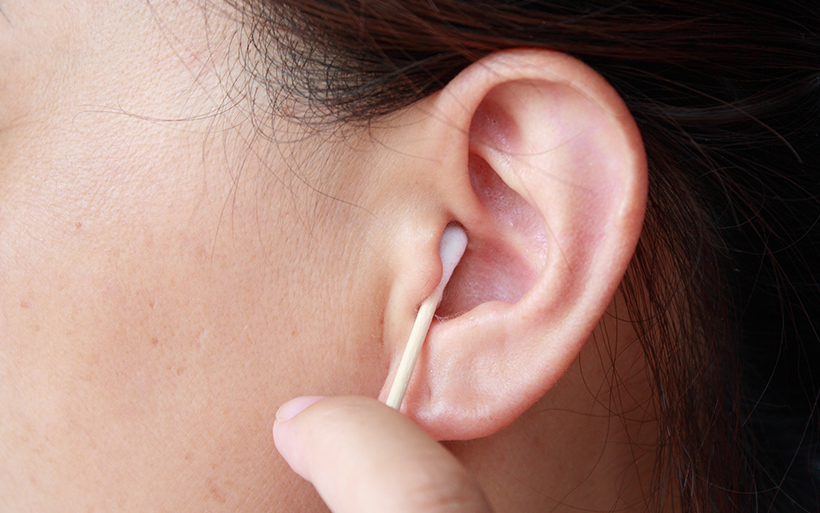
When hearing feels dampened, the instinctive desire is to use a Q-tip, but this is often a hazardous move. In truth, physical probing often compacts the cerumen further against the eardrum, making the situation worse.
Clinical research shows that self-cleaning often leads to accidental injury or more complex blockages.
Similarly, ignoring initial auditory decline can postpone care that assists in maintaining communication, safety, and well-being.
Ways a Professional Evaluation Helps
A simple otoscopic check can instantly verify if earwax is blocking the ear.
When wax is the issue, in-office flushing or clinical clearance provides instant relief.
When the ear is unobstructed but sound remains muted, a diagnostic assessment is required to audit your auditory health.
Clinicians urge an immediate auditory screening if you begin failing to communicate or manage your environment.
Choosing the Right Path for Improved Hearing
Dampened auditory input doesn’t necessarily mean permanent damage.
In many instances, cerumen accumulation is the cause, and it’s highly manageable.
Obtaining professional care guarantees you find the exact cause and the right remedy for your hearing requirements.
In the end, an expert consultation is the single certain way to differentiate between a fleeting obstruction and a permanent change.
Addressing the issue immediately halts the stress of the unknown and places you on the track to improved hearing.
Rather than wondering what is wrong, book a quick consultation with our specialists to get the truth.